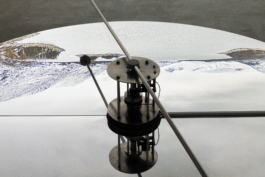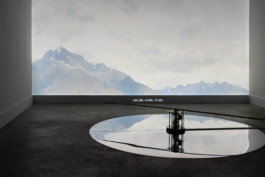
Tempo-Imagem, installation view at gnration, Braga 2024.
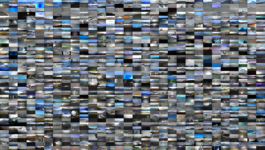
Tempo-Imagem, installation view at gnration, Braga 2024. Video: collaboration with Neva Agency / gnration.
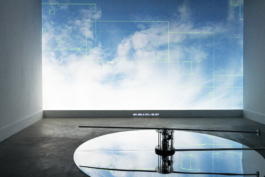
A growing archive for Tempo-Imagem. Screenshot taken on 07.10.2024.

Tempo-Imagem, installation view at gnration, Braga 2024.

Tempo-Imagem, installation view at gnration, Braga 2024.
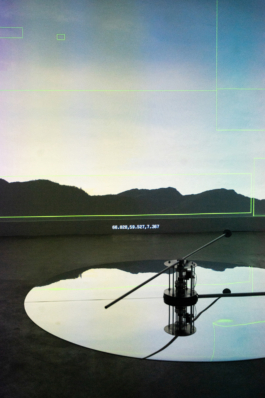
Tempo-Imagem, installation view at gnration, Braga 2024.
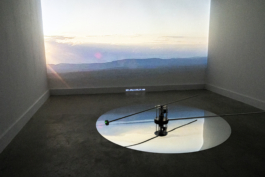
Tempo-Imagem, installation view at gnration, Braga 2024.
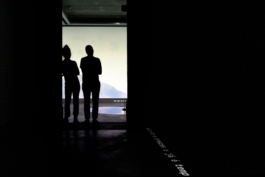
Tempo e Tempo, exhibition view at gnration, Braga 2024.
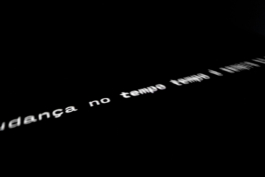
Tempo-Palavra, installation view at gnration, Braga 2024. Photograph: Adriano Borges.
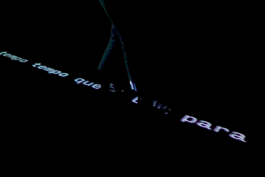
Tempo-Palavra, installation view at gnration, Braga 2024. Video: collaboration with Neva Agency / gnration.

Tempo-Palavra, installation view at gnration, Braga 2024. Photograph: Adriano Borges.
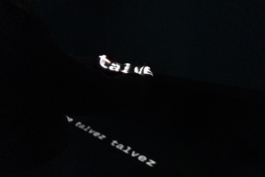
Tempo-Palavra, installation view at gnration, Braga 2024.
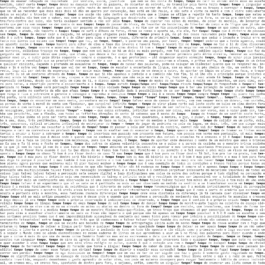
A growing archive for Tempo-Palavra. Screenshot taken on 07.10.2024.
Transmedia project, with artworks:
In my mother tongue, time and weather are the same. Tempo e Tempo begins with the double meaning of the word tempo in Portuguese, signifying both chronological time and non-linear weather. In the age of heat, two formulations—image and word—question this entanglement amidst shifting climate conditions through different facets of language in the post-digital condition.
In the installation Tempo-Imagem (Time-Image), a machine peripherally scans and projects, in real time, open-access weather cameras that observe the transformation of skies, seas, forests, deserts, glaciers, and rivers. A computer vision algorithm detects changes across these streams and their probabilities, choreographing the transmission flow of these devices across the Earth toward a dreamlike temporality in which past, present, and future meet.
The installation critically grants human access to a typically hidden stage of unsupervised machine learning in climate models, unfolding on a cinematic scale in space. By performing this task slowly and kinetically from a local perspective, it sheds light on the gaps within global climate observation and inverts dominant universal logics of visibility. Places with a lower incidence of weather cameras tend to gain more screen time as the machine scans across the Earth and its uneven concentrations of climate data. In doing so, the work raises questions about how indigenous and non-hegemonic worldviews persist within technocultures shaped by climate crisis, digital surveillance, and planetary computation. Rooted in media art history, Tempo-Imagem follows the thread left open by La Région Centrale (Michael Snow, 1970) in search of a time-image. By shifting from the movie camera’s center to the periphery of decentralized weather cameras, it proposes an entangled vision of the world as it unfolds through an anti-colonial viewpoint, bridging natural and artificial temporalities in search of a world where many worlds fit in.
In Tempo-Palavra (Time-Word), a stream of text is projected onto the floor at a fixed speed, traversing the interstice of space and bodies. The text takes the form of a litany composed from a growing corpus of verses that begin and end with the word tempo, written in Brazilian and European Portuguese. Algorithmically concatenated into a seemingly infinite flow, the projection grants this corpus duration, rhythm, and light, inviting its subtle modulation through movement and presence in space. Crafted with diligence and a resistance to the artificial automation of large language models, the work navigates the nuances, meeting points, and distancings between tempos verbais (verbal tenses) in search of a syntax of time.
Produced in collaboration with Ricardo Vieira within the framework of the European Media Art Platform residency program at gnration with support from the Creative Europe Culture Programme of the European Union.
© 2012 - 2025